
When deciding on a swimming pool for your home, one of the most important decisions you’ll need to make is the material used for its construction. This is because the type of pool you choose and what it is made of will determine the way it looks, along with its longevity, performance and how well it can be customised to suit your needs.
Among the most popular options are concrete, fibreglass and vinyl pools, each offering its own set of advantages and disadvantages.
Concrete swimming pools require more time to craft and are built with steel rebar and sprayed or poured concrete, allowing for custom shapes and finishes. Conversely, fibreglass pools offer rapid installation, but limited customisation, using pre-moulded, fibreglass shells installed into an excavated site. Lastly, vinyl pools feature a steel or polymer frame with a vinyl liner, offering a budget-friendly, but less aesthetically appealing option. Installed by assembling the frame and fitting the liner over a sand or concrete base.
While fibreglass and vinyl pools are often praised for their quick installation and lower initial cost, concrete pools remain the leading choice for homeowners. Particularly for those seeking a long-lasting, fully customisable and luxurious swimming pool perfectly designed and suited to their lifestyle with no compromises on quality or style.
In this guide, we’ll explore the key differences between concrete, fibreglass and vinyl pools and delve into why concrete pools are generally considered the superior option. Whether you’re focused on superior luxury, customisation, durability or adding value to your home, concrete pools offer distinct advantages that make them an outstanding investment.
Five Key Differences That Separate Concrete Pools From The Competition
1. Customisation
Arguably one of the most significant differences and benefits of concrete pools over fibreglass or vinyl pools is the level of customisation available. Concrete pools offer virtually unlimited design possibilities, whereas vinyl and fibreglass pools are pre-fabricated and come in a limited range of shapes, depths and sizes.
This means you are confined to a set range of pool styles that may not complement your home, needs, space requirements or preferences. If you are seeking a truly luxurious outcome, concrete pools simply cannot be outdone in terms of customisation.
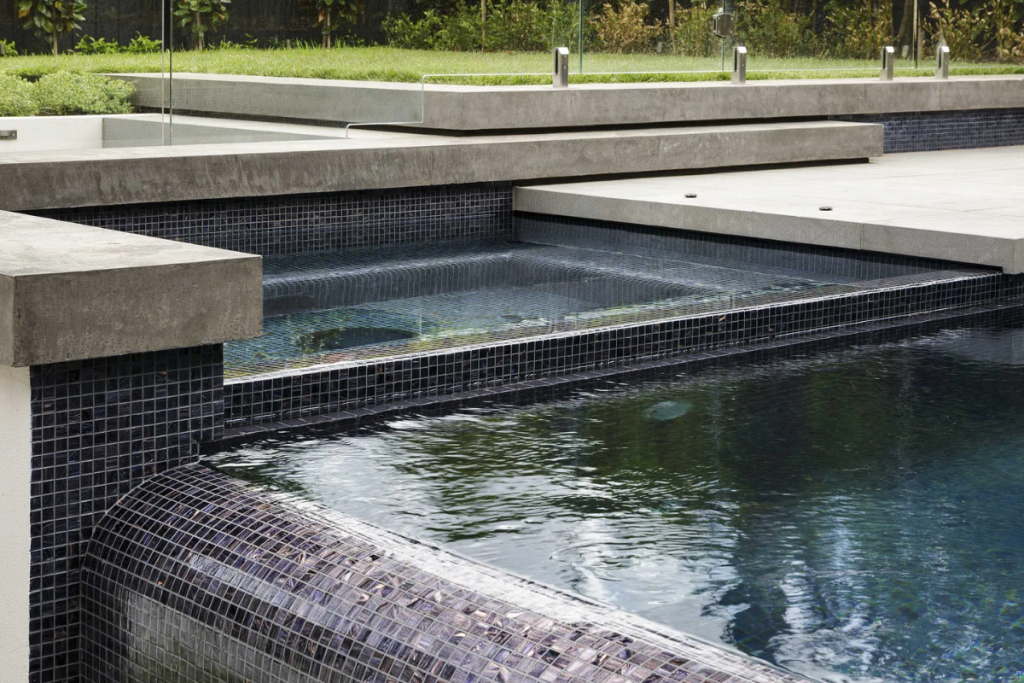
Whether your yard is small and compact or offers plenty of space, you can design a pool that fits it perfectly. Additionally, because a concrete pool is custom-designed you also have the freedom to add unique features that enhance the aesthetic and functional value of your pool – such as a spa, swimjet, cold plunge or beached area.
2. Durability & Strength
Adding a pool to your home is usually a significant investment, and as such you want to know that it is going to last as long as possible. When we look at the cost over time of concrete pools vs fibreglass or vinyl pools, concrete again comes out on top.
While vinyl pools are particularly susceptible to tears or punctures, even heavier-duty fibreglass pools are incomparable against concrete in terms of strength and durability. Often outlasting fibreglass pools by many decades, concrete pools are formed using a combination of steel reinforcement and heavy-duty concrete.
By comparison, a vinyl pool may only last between 5 to 15 years and may require a new liner many times throughout its lifetime to remain functional. Fibreglass pools, while made from a tough moulded shell reinforced with fibreglass, simply cannot offer the same level of structural strength or lifespan as a concrete pool.
3. Size & Depth
When it comes to the size and depth of your pool, concrete pools once again offer greater versatility compared to fibreglass or vinyl options.
As fibreglass pools are manufactured off-site, their available sizes and depths are limited by transportation constraints. Meaning they must be able to fit on a suitably sized truck and be safely manoeuvred into place utilising a crane. As such you have a limited number of shapes, sizes and depths that you can choose from.
While constructed using a frame and liner means vinyl pools can be made bigger or smaller with greater ease and without transport concerns, being above ground, depth is limited. Not only are vinyl pools generally able to be no deeper than around 1.8 metres, they permit no variations so you cannot create a deeper or more shallow end.
Because concrete pools are built on-site, there are no limitations to their size, depth or shape. Whether you want a massive Olympic-sized pool for serious lap swimming or a compact, courtyard pool for lounging, a concrete pool can be designed to meet your exact needs. This includes the option to have shallow, beached areas for children or relaxing and deeper sections for diving as preferred.
4. Maintenance
It’s worth noting that while concrete pools offer many advantages in terms of design and durability, they can require more specialised care than fibreglass or vinyl pools. However, all pools require ongoing maintenance and with the correct care, a concrete pool is typically still able to outlast the alternatives.
Just like any other pool, concrete pools require regular cleaning and chemical treatments to prevent algae buildup and keep them looking their best. Modern filtration systems and automatic pool cleaners greatly assist with this and largely reduce the need for intensive hands-on care. Additionally, Laguna customers have the option to include an in-floor cleaning system in their pool to further reduce hands-on maintenance.
Fibreglass and vinyl pools, by comparison, have smooth, non-porous surfaces that are more resistant to algae growth and may therefore require less frequent cleaning. However, both of these pool types are more susceptible to damage from sharp objects and can develop cracks or splits.
For a vinyl pool this can often be remedied fairly easily with a liner replacement. In a fibreglass pool, this is a much more complicated fix and may not always be successful.
5. Style & Aesthetics
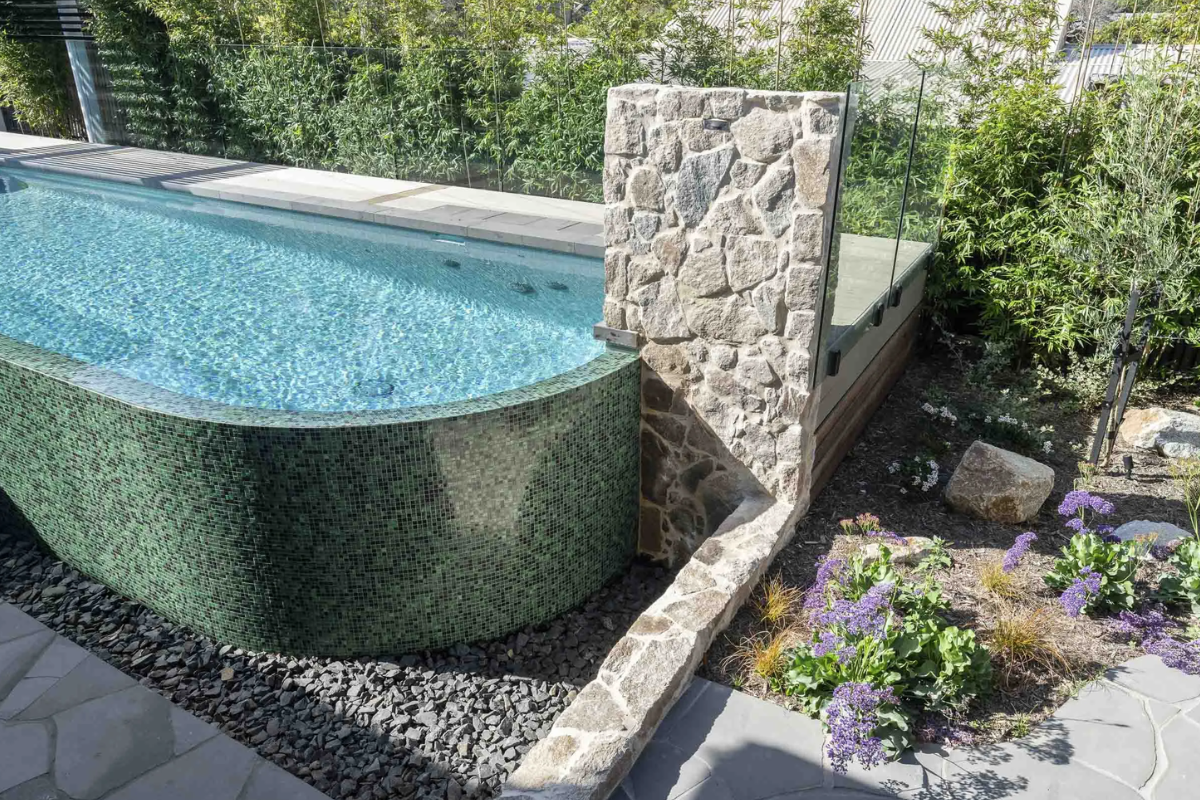
Once again when it comes to aesthetics, concrete pools have the upper hand due to their customisable nature. You can choose from a wide range of finishes, such as render, aggregate, tile or even natural stone, to create a breathtaking pool that seamlessly blends with your home’s architecture and surrounding landscape.
When we look at concrete vs fibreglass pools or concrete vs vinyl pools in terms of style and aesthetics, your choices are much more restricted. While you may be offered a choice of colours, patterns and textures depending on the pool type, the selection will be considerably limited compared to concrete pools.
This can make it incredibly difficult to achieve the look you are after or to attain a pool that looks properly integrated with its surroundings. This is especially true for vinyl pools that sit above ground, which without extensive camouflage through decking and landscaping, feature a very visible support framework.
Concrete Pools – Worth the Investment
While fibreglass or vinyl pools may have their advantages – such as quicker installation and lower upfront costs, concrete pools offer superior customisation, durability and longevity overall.
If you’re looking for a luxurious pool that can be tailored to your exact specifications and will last a lifetime, a concrete pool stands out as the best choice. Allowing you to create a resort-style escape at your home, they represent the ultimate investment for homeowners seeking a spectacular addition to their outdoor living space.


