
If you’re considering a pool for your home, one of the first decisions you’ll come across is whether to choose a concrete or fibreglass pool.
At a glance, both achieve the same outcome – a place to swim, relax and spend time outdoors. But the way each is designed and built leads to very different results, particularly in homes where the site is unique and the pool is expected to feel connected to the architecture and surrounding space.
Understanding that difference early helps set the direction for the entire project, from how the pool sits within the landscape to how it’s experienced day to day.
The Fundamental Difference
At its simplest, the difference comes down to how each pool is created.
Fibreglass pools are manufactured off-site as a complete shell, then delivered and installed into the prepared space. The shape, size and internal layout are already set, so the process is about selecting a design that fits within those parameters. This can be limiting if the design doesn’t completely suit your requirements or property. For example, if the bench seat faces the wrong way, or entry steps are at the wrong end of the pool.
Concrete pools are fully-custom designed to suit your property and needs, and then built entirely on site. The concrete structure is formed within the space, with each of the following design elements installed on site.
From there, the design isn’t limited to what’s available – it’s shaped around what the space, and your family, requires.
Design Flexibility
Fibreglass pools are selected from a catalogue of pre-designed shapes. While there may be a range of options, the structure itself cannot be adjusted beyond those set designs.
Concrete pools are designed from the ground up. This allows for:
- Proportions that suit the scale of the home and your unique requirements
- Custom shapes and depth profiles
- Integrated steps, ledges and spa zones
- Customisation for your needs – such as a lap pool for fitness, combined with an area for recreation and fun.
- Alignment with architectural lines, materials, overall vision and outdoor layouts
Rather than choosing the closest fit, the pool is designed to belong within the space.
Integration With the Home
A pool should sit naturally within the space, not feel placed into it.
With fibreglass, the process requires working around a fixed form. This can limit how closely the pool aligns with surrounding elements, particularly in more considered or architectural homes.
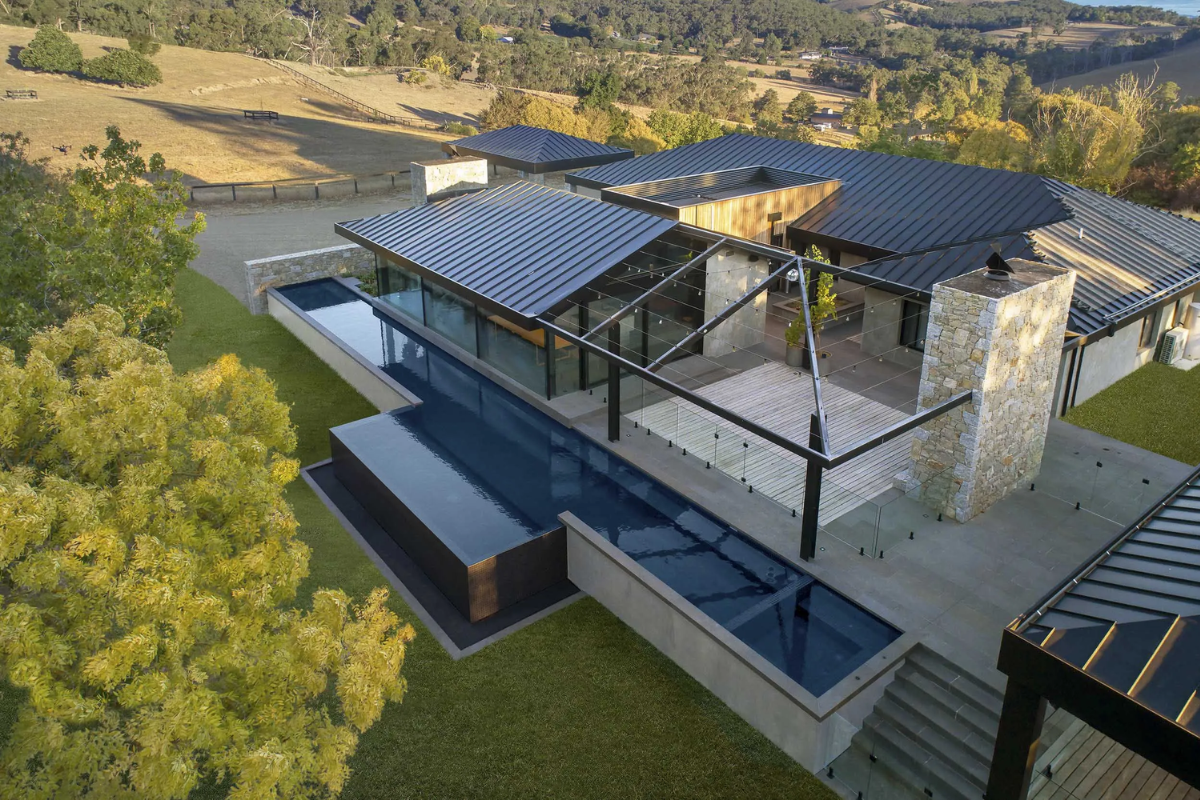
Concrete pools are designed alongside the home and outdoor areas. Positioning, edges and sightlines are considered and integrated into the design from the start, allowing the pool to connect with:
- Indoor and outdoor living zones
- Entertaining areas and circulation paths
- Views, light and orientation
The result is an outdoor space that sits naturally within its surroundings – where the pool is part of the design, not separate from it.
Finishes and Visual Detail
The finish of a pool shapes how it looks on completion and how it continues to present over time.
Fibreglass pools rely on gelcoat finishes. These are typically uniform in finish and low-maintenance, but limited in variation and detailing.
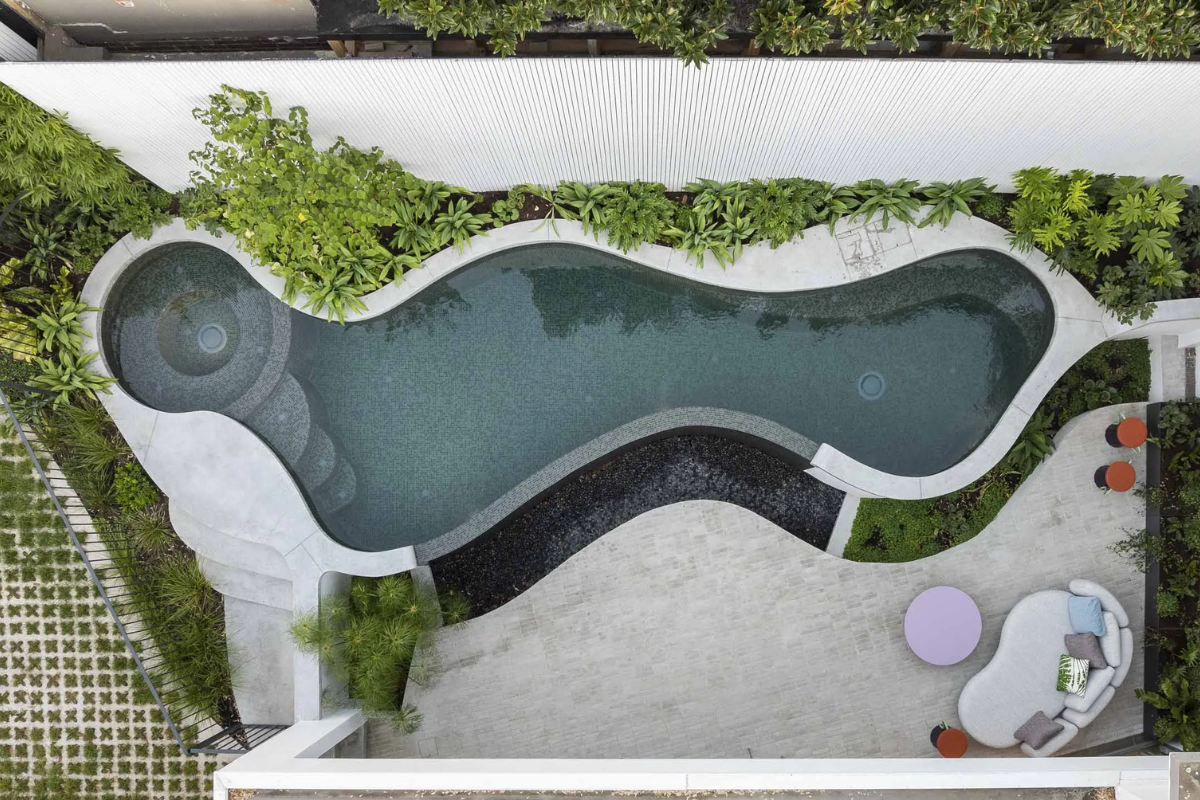
Concrete pools allow for a more considered material selection, including fully tiled interiors using glass mosaics or ceramics, along with refined edge detailing that can be aligned with surrounding materials such as natural stone or architectural finishes.
This approach also makes it possible to create pool forms and features that aren’t achievable with pre-formed fibreglass shells. Infinity edges, freeform designs, integrated spas, curved elements, combined lap and recreation zones, and even cold plunge integration within the pool itself can all be incorporated as part of the overall design.
The result is a pool that reflects the home and how it’s used, with a finish, colour and form that brings a long-held vision for the space to life.
Suitability to Different Sites
Site conditions often determine what’s achievable.
Fibreglass pools require delivery as a single shell, which limits suitability and access on tighter blocks or more complex sites.
Concrete pools are built into the existing landscape, allowing them to respond directly to the conditions of the site. This is particularly important for:
- Sloping or irregular blocks
- Homes with restricted access
- Projects where positioning needs to be precise
- Architecturally designed builds
Instead of working around constraints, the design is developed to suit them, enhancing what’s already there and shaping the space around it.
Build Process and Timeframe
The construction process for each pool type reflects a different approach.
Fibreglass pools are manufactured off-site and installed once delivered, typically resulting in a shorter on-site timeframe.
Concrete pools are built in stages, from excavation through to finishing. Each phase contributes to the overall outcome, allowing for careful execution and alignment with the design.
While this takes longer, it ensures the final result reflects the level of detail and refinement expected in a high-end, bespoke project.
Longevity and Flexibility Over Time
Both pool types provide a long-term solution, but they differ in how they adapt over time.
Fibreglass pools are more fixed in both structure and finish. Over time, the gelcoat surface can fade with UV exposure and may be more prone to surface wear or cracking, with limited options to alter or restore the original look.
Concrete pools offer strong structural performance along with the ability to update or refine finishes in the future. This becomes valuable as homes evolve or outdoor areas are updated.
Warranties can also vary between manufacturers and builders, so it’s worth understanding what is covered and how this aligns with the expected lifespan of the pool.
For homeowners thinking beyond the initial build, this level of flexibility and long-term performance is often a deciding factor.
A Different Level of Investment
The difference in investment comes back to the approach behind each option.
Fibreglass pools are based on a standardised product. Efficiencies come from volume production and repeatable manufacturing processes, with the design already set before it reaches site.
Concrete pools follow a different path. Design, engineering and construction are developed specifically for the home and the conditions of the block, with decisions made around layout, finishes and day to day functionality.
The investment is not just in a pool, but in what it brings to the home. Each project is entirely customised and one-of-a-kind and never repeated. It’s designed specifically for the space it sits within and integrated with the home itself, creating something that continues to feel right over time.
Shaping the Right Outcome for Your Home
For homes where the pool is expected to sit naturally within the architecture and outdoor space, the approach behind the build becomes critical.
Concrete pools allow the design to respond to the home, the site and its intended use. Proportions, positioning and finishes are all considered as part of a larger vision, rather than working within a fixed form.
This is what allows the pool to feel integrated from the outset, not something added in, but something that belongs. It’s the foundation of creating pools with purpose, where each decision is shaped around how the space is used and experienced over time.
Designed With Purpose
The most important decision is not simply the material, but what you want the space to become.
If the goal is a pool that feels considered, aligns with your home and supports how you use the space day to day, a concrete approach provides the flexibility to achieve it.
At Laguna, this thinking underpins every project. Backed by decades of experience and recognised through multiple state and national awards, each pool is designed and built to seamlessly connect to the home and its surrounding environment.
The result is more than a pool. It’s a space that reshapes how the outdoors is experienced – quietly redefining what a backyard pool can be.


