
An above ground pool can work beautifully when the landscape around it is carefully planned. Whether the pool is part of a new project or already in place, the surrounding space plays a major role in how comfortable, practical and connected it feels.
At Laguna, landscaping for above ground pools is approached with purpose – whether designed alongside a new pool or reshaped around an existing one to improve how it functions and connects with the surrounding space.
Use Levels to Help the Pool Sit Comfortably
Above ground pools often benefit from subtle changes in level around them.
As seen in our award-winning Clifton Hill project, steps, raised garden beds or retained edges can help the pool feel more settled within the landscape, making access easier and improving how the pool relates to the surrounding garden. For existing pools, adjusting levels can dramatically change the feel of the space without altering the pool itself.
Handled well, these transitions reduce visual separation and create a more natural flow through the backyard.
Use the Landscape to Frame the View
Where an above ground pool is positioned to capture a view, the landscape can be used to gently direct attention outward.
Pergolas, planting or low structures placed along the sides of the pool help frame the space and guide the eye toward the preferred outlook, while keeping the area beyond the pool edge open. This approach works particularly well with infinity edges, where visual clutter near the edge can weaken the connection between water and landscape.
For existing pools, introducing flanking elements or refining planting placement can improve how a view is experienced without altering the pool itself.
Create Clear and Comfortable Entry Points
With above ground pools, the entry point is often one of the most visible elements and can strongly influence how the pool is perceived within the landscape.
Through landscaping, entry points can be reshaped to suit the existing pool and its surroundings. This may include forming wide steps in concrete, pavers or stone, introducing a deck or platform at pool height or refining surrounding surfaces so the approach feels deliberate and natural.
An entry designed as part of the landscape helps the pool feel settled and improves how the space is used overall.
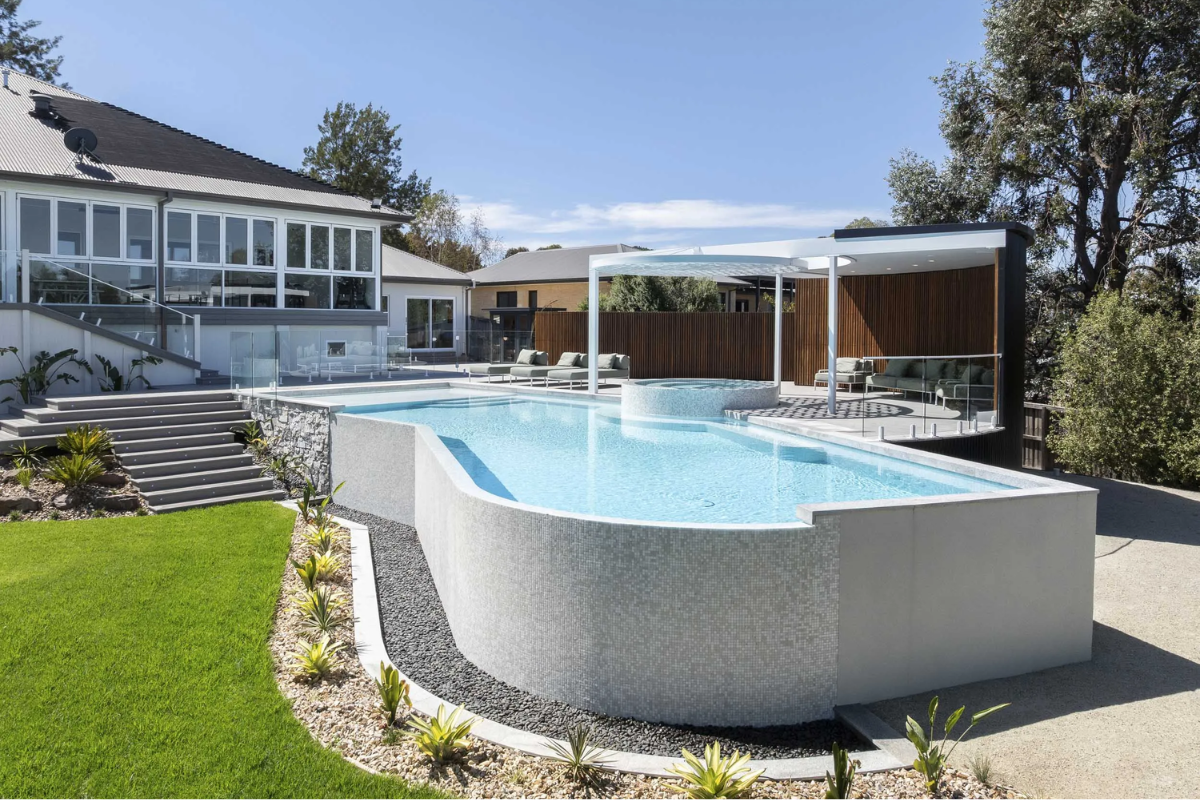
Make the Edges Work Harder
Decking, low walls, extended coping or built-in planters can all create places to sit, supervise swimming or relax beside the water. These elements help reduce the need for additional furniture and encourage people to spend time around the pool rather than moving away from it.
Timber decks in particular can help soften the pool’s form, improve access and provide clear zones for sitting and movement. Designed as part of the landscape, decking feels like a natural extension of the pool rather than an added layer.
For existing pools, targeted changes at the edges, including new decking or integrated seating, can significantly improve how welcoming and usable the space feels.
Treat the Pool’s Exterior as a Design Feature
Above ground pools don’t need to be hidden to work well in a landscape.
The pool’s exterior can be finished or detailed to become part of the overall design through tiling, rendered surfaces or exposed concrete paired with complementary materials. Timber, stone or paving around the pool can add texture and visual interest without relying on planting to soften the form.
This approach works particularly well for above ground pools in smaller spaces or where a low-maintenance landscape is preferred. For existing pools, updating the exterior finish or surrounding materials can quickly change how the pool is perceived, turning it into a deliberate feature rather than something to disguise.
Embrace Height and Slope When Planting
Planting can do a lot of the heavy lifting around above ground pools, particularly where the pool sits on a slope.
Gardens can be established below the pool to soften its base and help it sit more comfortably within the landscape. On sloping sites, this approach allows the pool to feel anchored rather than elevated, with planting used to follow the natural fall of the land.
Where retaining or flanking walls are present, planting can also be used vertically. Climbers and trailing plants can grow up or down these surfaces, adding depth and softness while reducing the visual weight of built elements.
Create Connection with Outdoor Living Spaces
Above ground pools work best when they sit within a broader outdoor living setting rather than feeling separate from the rest of the backyard.
Seating, dining or shaded areas positioned beside the pool encourage people to spend time there, even if they’re not swimming. These zones help connect the pool to the home and garden, supporting everyday use while keeping the space open and easy to move through.
Use Fencing Thoughtfully
Pool fencing is essential, but it doesn’t need to feel like an add-on.
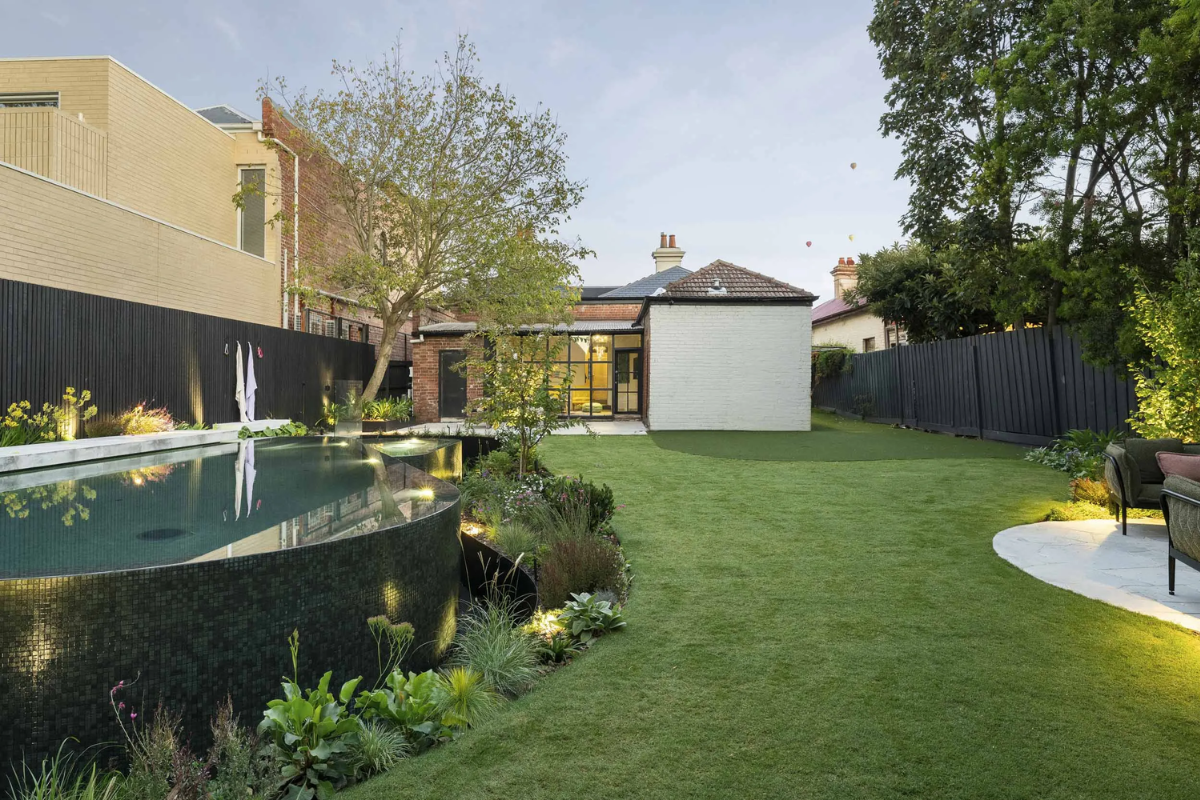
If chosen and positioned carefully, fencing can frame the pool, preserve views and help the space feel open and considered as demonstrated in our award-winning Balwyn North project. Glass fencing is often used to maintain sightlines, while minimal frames or finishes can add definition without visual weight. For a more open, low-visual solution, mesh pool fencing offers the best of both worlds. Traditional pool fencing options such as blade and tubular designs offer clear barriers between areas while still preserving sightlines and architectural cohesion.
Moat fencing, or a wet edge design, is a popular solution for luxury pools, allowing the pool structure itself to act as the compliant barrier. The moat is typically sunken and can be landscaped with planting, softening its presence within the overall design. When carefully engineered, this approach preserves uninterrupted views while delivering a clean, architectural edge that meets safety requirements.
For existing pool areas, updating fencing is often one of the simplest ways to improve how the pool and surrounding landscape are experienced.
Introduce Shade as Part of the Landscape
For above ground pools, shade works best when it is planned into the surrounding landscape from the beginning.
Pergolas constructed of timber, steel or aluminium, can be designed as open-slat structures, fixed-roof forms or operable louvre systems to provide flexible sun control throughout the day. In other settings, carefully positioned planting or climbing greenery over a framed structure can soften the built elements while offering filtered shade and privacy.
Designed as part of the overall landscape composition, these elements provide relief from the sun without enclosing the space or interrupting views, encouraging longer and more comfortable use of the pool.
Leverage Lighting to Showcase the Landscape
Lighting allows above ground pool areas to be used and enjoyed well beyond daylight hours.
Lighting planned as part of the landscape highlights key features of the pool and its surrounds, from steps and edges to textures in materials and planting, while improving safety and comfort. Soft, low-level lighting adds depth and atmosphere without overwhelming the space.
Used thoughtfully and integrated with automation, lighting enhances the landscape without competing for attention, allowing the pool to remain part of the space rather than its sole focus.
Keep the Approach Simple and Purposeful
Some of the most successful above ground pool landscapes rely on simple ideas, executed well.
Clear access, practical seating, thoughtful planting and well-considered levels often deliver better outcomes than complex features. This approach works particularly well for improving existing pools, where targeted landscape changes can significantly improve comfort and usability.
Above Ground Pool Landscaping With Purpose
Above ground pools come with their own conditions, and good landscaping responds directly to them.
Whether the pool is newly installed or has been part of the backyard for years, thoughtful landscape design can improve how it’s accessed, how it’s used and how it sits within its surroundings. Small, considered changes often have the greatest impact – helping the pool feel more comfortable, more connected and easier to live with.
Laguna brings this practical, design-led approach to both new and existing pool environments, shaping outdoor spaces that feel grounded, functional and suited to everyday life.


