
A home’s front landscape is the first moment of connection. It is how the house meets the street and how the experience of the property begins. Long before the front door is reached, the landscape establishes privacy, arrival and a sense of what lies beyond.
For most homeowners, front yard landscaping is rarely about surface appeal alone. It is about shaping an approach that feels calm and intentional – a garden that belongs to the architecture and can be enjoyed every day, across the years.
Designed to be enjoyed from multiple angles and shaped to suit the home and block, the front garden often benefits from simple, well-executed ideas.
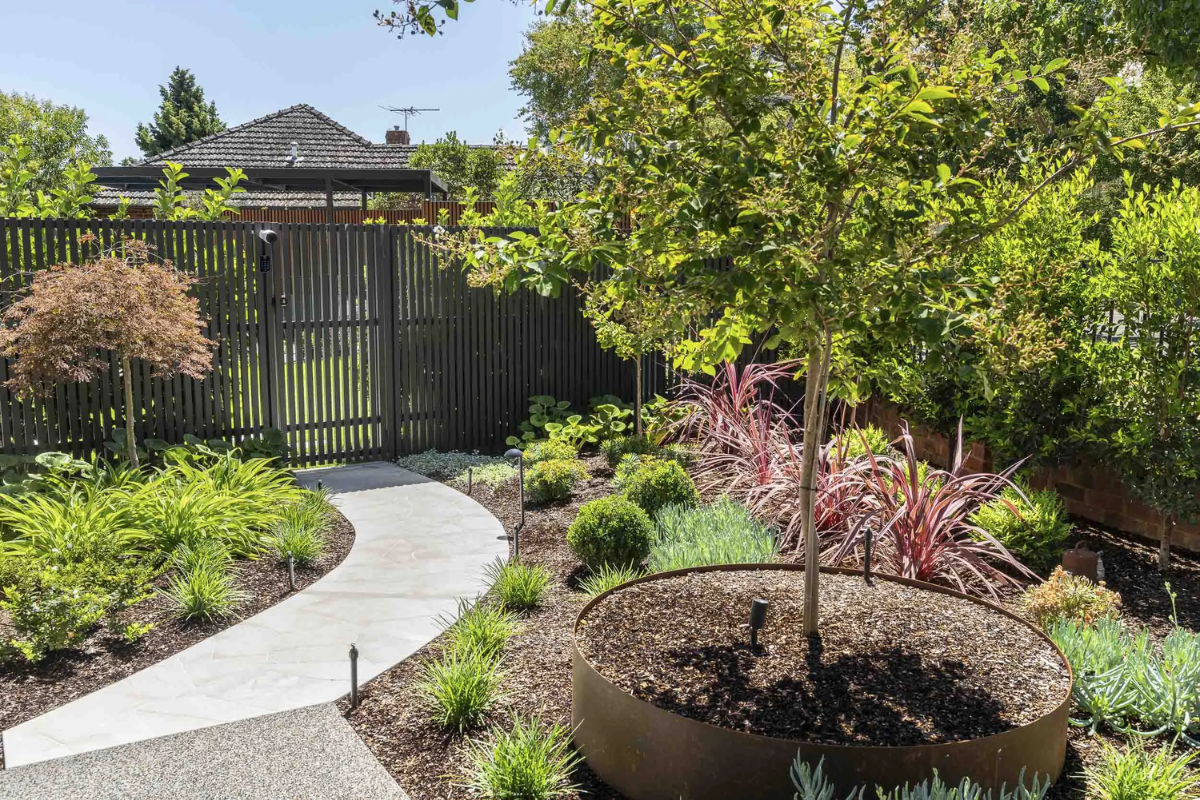
Guide Arrival With Thoughtful Entry Paths
The path to the front door plays a defining role in how a home is experienced. It sets the pace of arrival and signals the shift from public to private.
Considered entry paths often rely on:
- A clear change in material between driveway and path
- Gentle shifts in direction as the entry is approached
- Planting that frames movement without enclosing it
A path that subtly shifts as it approaches the entry naturally slows the pace of arrival. A change in surface underfoot and planting that guides rather than crowds, helps the approach feel intuitive and unforced.
Create Privacy Without Closing the Home Off
Privacy is often important at the front of a home, particularly in urban or suburban settings. The aim is rarely to block the street entirely, but to feel comfortable inside without disconnecting from the surroundings.
In practice, privacy at the front of a home is often achieved through:
- Low planting that softens edges
- Mid-height shrubs that filter views
- Feature trees that provide a focus point, as well as canopy and scale
Layered planting can screen views without creating a solid barrier. Low planting keeps the garden open at street level, while taller layers closer to the home provide separation where it’s needed.
Use Statement Planting to Anchor the Front Garden
A strong front garden doesn’t need many focal points. Often, a single flowering or deciduous tree is enough to give the space direction and a clear sense of purpose.
This might include:
- A sculptural tree positioned to mark the entry
- A feature plant anchoring the front garden
- Paired planting elements framing the approach
Placing a single statement tree near the front path can quietly signal arrival. With simpler planting around it, the eye has somewhere to rest, helping the space feel calm rather than crowded.
Leverage Space to Make Compact Front Gardens Feel Larger
Not every home has room for a generous front garden, but that doesn’t mean there isn’t opportunity. Smaller or narrower sites benefit from approaches that focus on proportion, clarity and flow rather than trying to do too much.
In practice, front gardens of this scale often rely on:
- A limited and consistent mix of materials
- Planting that supports movement rather than filling space
- Clear alignment between paths, levels and the entry
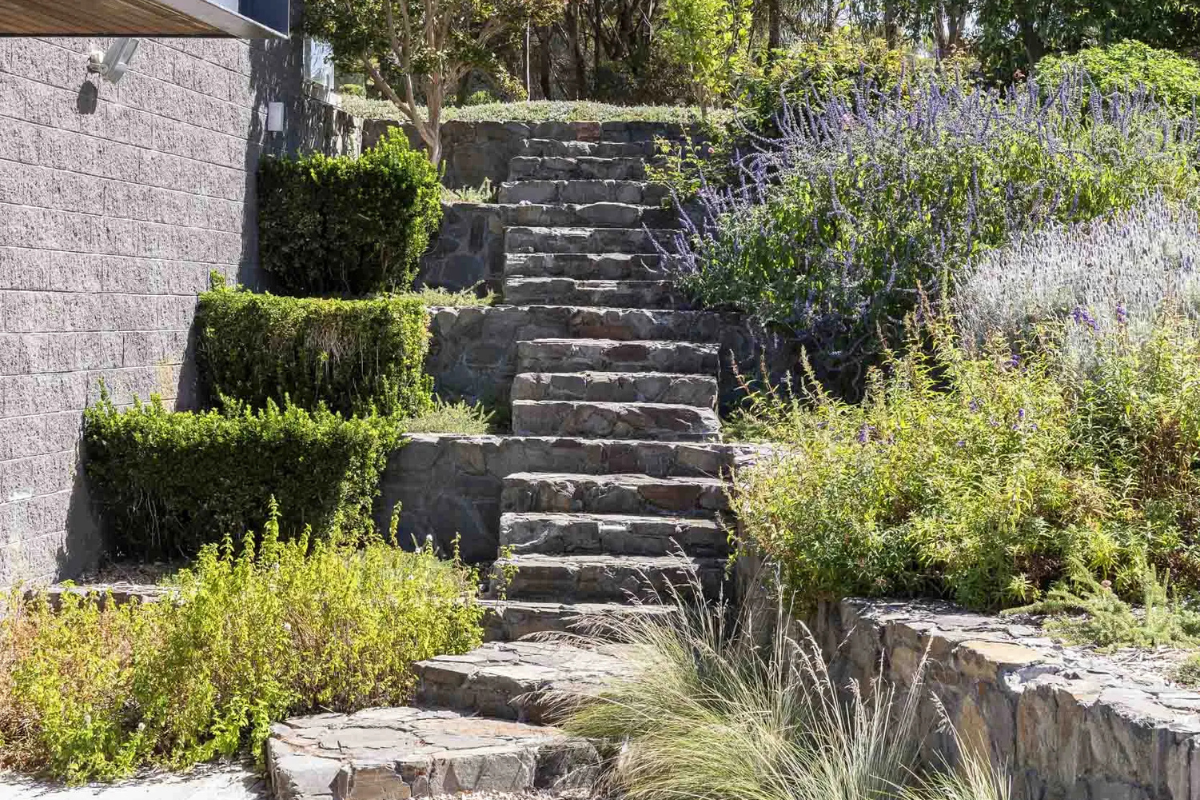
In compact front gardens, keeping planting low allows steps and hard surfaces to anchor the space. Taller plants near the entry add height without bulk, while a balanced mix of gravel and stone can add texture without distraction.
Work With Natural Light and Orientation
Light plays a major role in how a front garden feels throughout the day. Sun exposure, shade and orientation all influence how comfortable the space is and how well planting performs over time.
In practice, this often involves:
- Understanding where morning and afternoon light fall
- Using planting or built elements to provide shade
- Selecting plants suited to the site’s conditions
Positioning shade-tolerant planting closer to the home and sun-loving plants toward the street allows the garden to perform naturally, while also making the space more comfortable to move through at different times of day.
Choose and Set the Mood With Lighting
The front of a home continues to play an important role after dark. Lighting is an opportunity to define how arrival feels, whether that’s calm and understated or more dramatic and expressive.
Well-considered front garden lighting may include:
- Path and step lighting that supports safe movement
- Focused lighting near the entry
- Uplighting used to highlight planting, walls or architectural form
For those after a bold look, uplighting a feature tree or architectural wall can create a strong sense of arrival, setting a confident tone from the street. Paired with more practical lighting along paths and near the entry, the result feels intentional and welcoming, rather than overdone.
Integrate Features With Care
In some front gardens, carefully chosen features can add depth and atmosphere. Their success lies in how seamlessly they sit within the overall layout.
This may include:
- Shallow reflecting basins or subtle fountains
- Sculptural elements positioned along the arrival sequence
- Textural walls or integrated seating elements
A shallow pond or stone sculpture positioned beside the entry path can introduce movement and interest without dominating the space. Proportioned correctly, the result adds atmosphere without overwhelming the garden.
Work With the Environment
It’s natural to be drawn to certain looks, whether that’s sculptural tropical planting or crisp, architectural finishes. The most successful front landscapes, however, begin with an understanding of the environment the home sits within.
In practice, this approach often prioritises:
- Materials selected for how they perform in local conditions
- Plant choices suited to sun exposure, soil type and climate
- Layouts that support long-term ease rather than constant upkeep
Homes closer to the coastline, for example, often benefit from native grasses and coastal plant species that tolerate salt, wind and dry conditions. Where design responds to the setting in this way, the front garden performs better and continues to look strong over time with less ongoing maintenance.
A Seamless Landscape from Front to Back
A front garden should never feel disconnected from the rest of the home. It should set the tone for what follows.
Materials, planting character and spatial cues established at the front can continue through side passages, outdoor living areas and pool environments. This continuity allows the landscape to feel unified as a single space rather than fragmented.
At Laguna, front yard landscape ideas are always developed with this broader context in mind, ensuring a seamless continuity between the front of the home and the spaces beyond.
Laguna’s Approach to Front Yard Landscape Design
Every site presents its own opportunities and constraints. Laguna’s approach to front garden landscaping begins with understanding the home, the site and how the space will be used over time.
Working closely with homeowners, architects and builders, Laguna designs front landscapes that strengthen the home’s architectural presence while remaining practical and enduring. This approach draws on decades of experience delivering bespoke residential landscapes and pools and has been recognised through multiple industry awards.
The result is landscaping shaped to suit both the home and the people who live there, not simply to impress at first glance, but to continue welcoming you home for years to come.


